



Description
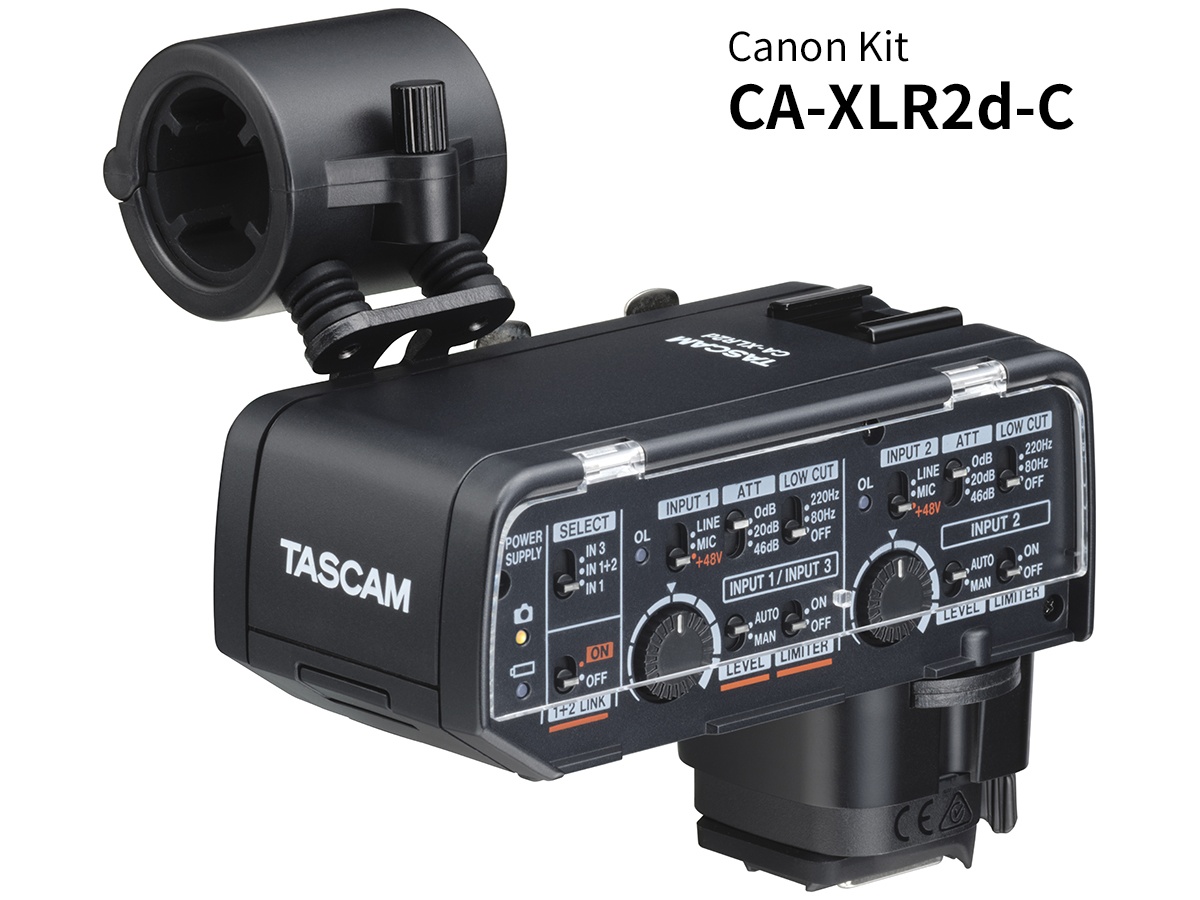
The CA-XLR2d-C is an XLR microphone adapter designed to expand microphone input options for mirrorless cameras. It adds two balanced XLR/TRS inputs plus an unbalanced 3.5mm input and routes audio to the camera via a digital accessory shoe or analog output. This delivers cleaner audio capture and reduces the need for post-syncing when used with compatible cameras.
The unit features a high-performance AD converter and an HDDA mic preamplifier that provide low noise and wide dynamic range. Inputs support microphone/line switching and +48V phantom power on XLR connectors. A 1/8-inch stereo mini jack supports lavalier mics and plug-in power devices.
Audio performance includes selectable sampling rates of 48 kHz and 96 kHz and quantization at 16 or 24 bit depending on camera sync. The mic amp achieves an equivalent input noise of -120 dBu or less and a dynamic range of 95 dB or higher. Output options include fixed camera-level analog out and headphone monitoring with impedance support from 16 to 250 ohms.
Connectivity includes two XLR-3-31 equivalent jacks, two 6.3 mm TRS inputs, one 3.5 mm stereo mini input, and a 3.5 mm PHONE/CAMERA output. The adapter can be powered by two AA batteries or supplied through a compatible camera accessory shoe when supported. A cold shoe on the top panel and a cable holder provide flexible mounting and cable routing.
Typical applications include ENG interviews, run-and-gun documentary shooting, and DSLR/mirrorless production where onboard mic preamps and multiple mic types are required. The CA-XLR2d handles dynamic and condenser microphones as well as line-level feeds from mixers, making it suitable for single-shot shotgun setups or dual-mic stereo recording. Its digital shoe output removes the need for manual audio/video synchronization on compatible cameras.
Installation is straightforward – mount to the camera shoe or use the included accessory adapters, attach microphones using the shock-mount holder, and select the appropriate input type and gain. The build provides vibration resistance and practical cable management to minimize handling noise. Firmware-free operation and camera-supplied power on supported bodies enable compact setups and reliable field operation.