


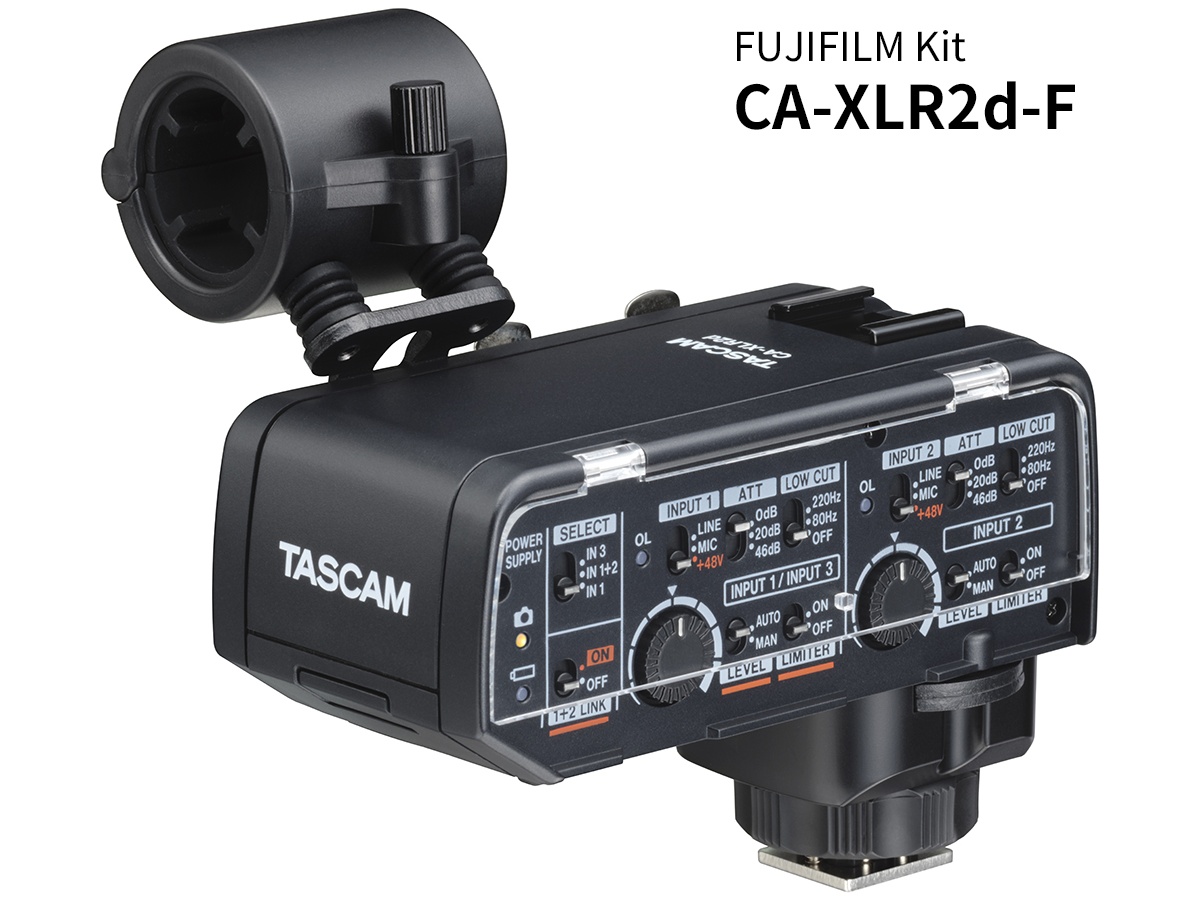

Description
The CA-XLR2d-F is an XLR microphone adapter designed to expand microphone input options on compatible mirrorless cameras. It provides two balanced XLR/TRS inputs plus a 1/8-inch stereo mini input to accept lavalier mics or other unbalanced sources. The unit converts microphone signals to digital audio and transmits them to the camera via a compatible accessory shoe – eliminating the need for external recorders when the camera supports digital shoe audio.
The adapter features a high-performance HDDA mic preamplifier to deliver low noise and a wide dynamic range. Each XLR input supports MIC/LINE switching and +48V phantom power to accommodate dynamic and condenser microphones. A built-in AD converter provides 48 kHz or 96 kHz sampling at 16 or 24 bit resolution synchronized to the camera settings.
On the performance side, the CA-XLR2d-F supports two channels of input and a total gain range of 66 dB per channel. Input impedances are specified at 2 kOhm or higher for mic inputs and 10 kOhm or higher for line inputs, and maximum input levels range from -60 dBu up to +24 dBu depending on input type and ATT setting. The unit accepts power from the camera accessory shoe or from two AA batteries and consumes up to 2.0 W.
Connectivity includes two XLR-3-31 equivalent connectors, 6.3 mm TRS jacks for balanced connections, a 3.5 mm stereo mini INPUT 3 that supports plug-in power, and a 3.5 mm OUTPUT jack for camera or headphone monitoring. A top-panel cold shoe allows additional accessories to be mounted while a cable holder secures wiring around the camera body. The adapter is compatible with Canon, FUJIFILM, and Nikon accessory shoes that support digital audio transmission.
Typical use cases include ENG and run-and-gun production, interviews, documentary shoots, and on-camera stereo or dual-mic recording scenarios. The CA-XLR2d-F enables shotgun or lavalier combinations, dual dynamic/condenser setups, or direct line-level feeds from a mixer. It is suited to productions requiring direct digital audio capture to the camera and tighter sync between audio and video.
Installation is straightforward – mount the unit to the camera accessory shoe or use the included cold shoe mount adapter and secure microphones in the supplied mic holder with shock mount. Menu synchronization for sampling frequency and bit depth is handled with supported cameras to match the camera recording settings. The enclosure and shock mount design minimize handling noise while maintaining flexible mounting and cabling options.