




Description
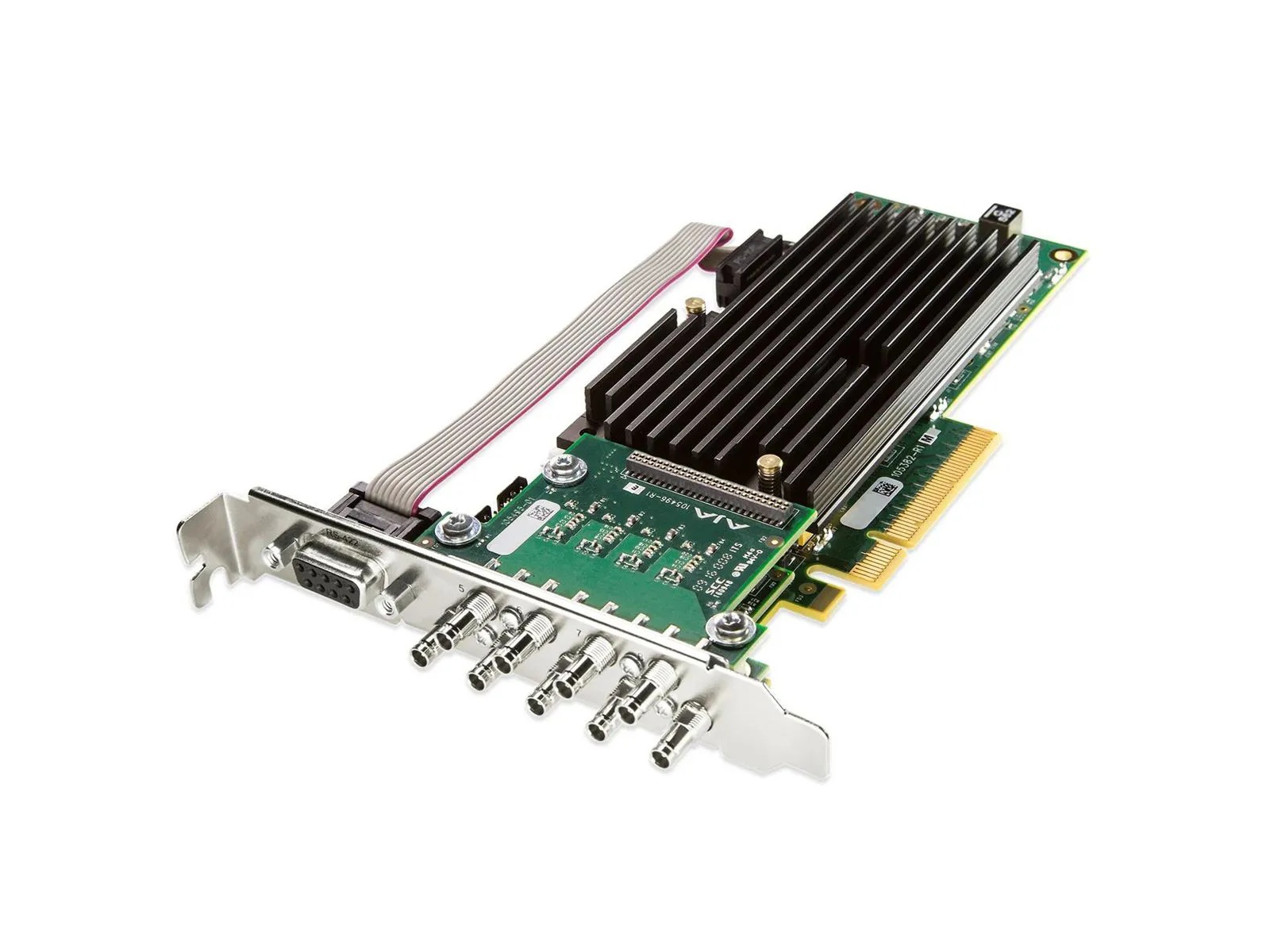
The CRV88-9-T-CCF is an 8-lane PCIe 2.0 I/O card designed to provide high-density SDI input and output for broadcast and media servers. It offers eight independently configurable 3G-SDI BNC connections that can be set as inputs or outputs programmatically. The card supports a broad range of video formats including 4K, UltraHD, 2K, HD and SD at professional frame rates.
Main capabilities include eight bidirectional 3G-SDI links with 16-channel embedded audio per link and support for RGB 4:4:4 12-bit and YCbCr 4:2:2 10-bit color depths. Connections can be linked for dual link or 4K/UltraHD operation and the card supports high frame rate 4K workflows at 48p, 50p and 60p. The CRV88-9-T-CCF also provides multiple processing blocks such as frame stores, color space converters, mixer/keyer widgets and 1D LUTs for on-card signal manipulation.
Performance specifications include support for 4096×2160 and 3840×2160 formats at professional frame rates, plus multi-rate HD and SD formats. Audio support covers 16-channel 24-bit SDI embedded audio at 48 kHz synchronous operation. Power consumption is low, rated at 21W typical and 23W maximum, and the card is available in full-height and low-profile models to fit a variety of chassis.
Connectivity is comprehensive and broadcast-focused with eight 3G-SDI BNCs, Din 1.0/2.3 where applicable, an external switchable LTC/reference input on the rear and a secondary LTC header internally. An RS-422 control port is provided externally on the full-height model or via an internal header for low-profile cards. The card also includes VPID signaling for SDR/HDR transfer characteristics and supports PQ, HLG and Dolby Vision metadata capture and auto playback detection.
Typical applications include high-density ingest for playout and channel-in-a-box systems, multi-channel capture for transcoding and distribution, and 4K/UltraHD channel aggregation using linked SDI pairs. The card integrates into developer partner systems for OEM solutions and supports professional workflows requiring frame-accurate control and embedded audio handling. It is suited to broadcast stations, post facilities and media server integrators.
Installation requires an available 8-lane PCIe 2.0 slot and adequate case ventilation for the passive heatsink model. The card is designed for fanless operation when airflow across the heatsink meets specifications – chassis ventilation immediately adjacent to the PCIe bracket is required. Firmware and driver support are provided through AJA development resources and the card includes compatibility support for Apple M1 platforms.