



Description
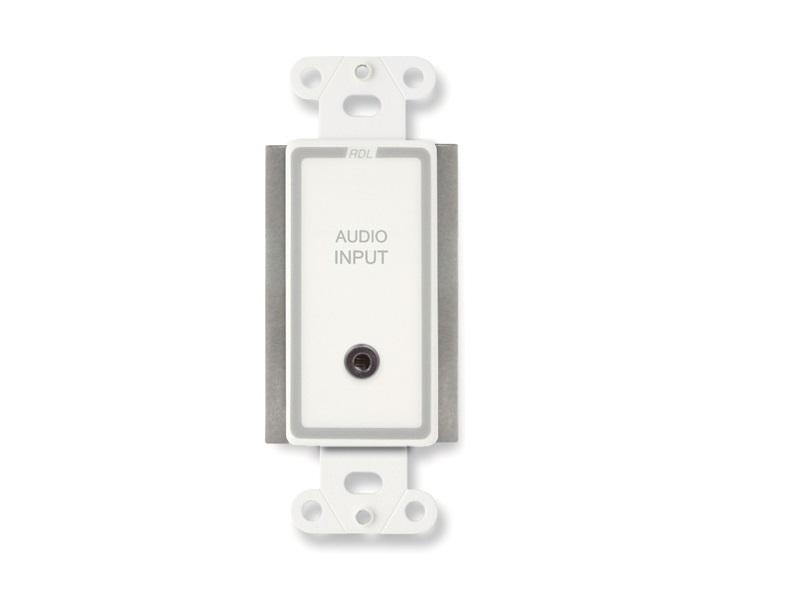
The D-TPS8A is a Format-A multiple-location audio transmitter designed to distribute stereo consumer-level audio over two pairs of twisted pair cable. It accepts a front-panel stereo Mini jack input and provides balanced Format-A outputs for integration into distributed audio systems. The module is compact and intended for mounting in wall boxes or standard U.S. electrical boxes.
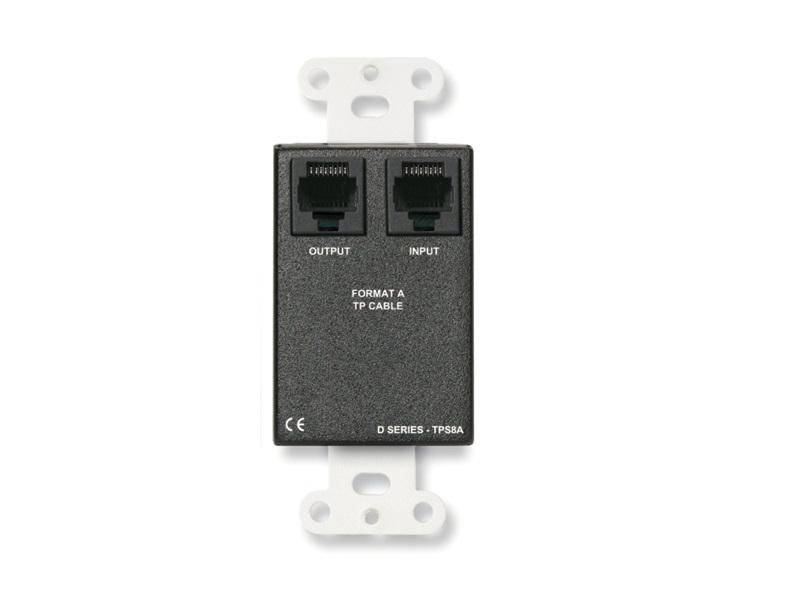
The unit features studio-quality preamplifiers that accept -10 dBV consumer signals and provide a fixed 12 dB gain optimized for normal operating levels. Buffered left and right channels are routed to Format-A pairs B and C so each pair carries a single channel. The rear RJ45 input allows chaining of additional TPS8A modules and the summing of upstream signals with the local Mini jack input.
Audio performance is engineered for low noise and low distortion with a frequency response of 20 Hz to 50 kHz (±0.5 dB) and THD+N under 0.1% across that range. Measured crosstalk is better than 85 dB at 1 kHz and noise below +4 dBu is specified at less than -85 dB. The module provides more than 20 dB of headroom above +4 dBu.
Connectivity is provided via a front-panel Mini jack for the local stereo source and rear-panel RJ45 jacks for Format-A signal and power pass-through. The D-TPS8A uses Format-A signal pairing – left to pair B and right to pair C – and supports daisy-chaining with single-pair senders when the upstream sender is set to feed pair A. Remote powering is supplied through the twisted pair cable from other modules or an RDL power inserter.
Typical applications include hotel rooms, distributed audio zones, or multiroom installations where local stereo sources must be combined with distributed feeders. The absence of illuminated indicators prevents distraction in dark environments such as guest rooms. The module is available in Decora-compatible front laminates to match common wall plates and control modules.
Installation is straightforward – the compact module fits standard wall boxes and requires a 24 Vdc supply delivered over the Format-A cable or from a separate distributor. No local power supply is necessary when connected to a powered Format-A infrastructure. The design emphasizes simple integration, reliable audio performance, and minimal visible hardware in finished spaces.