




Description
 Download Manual
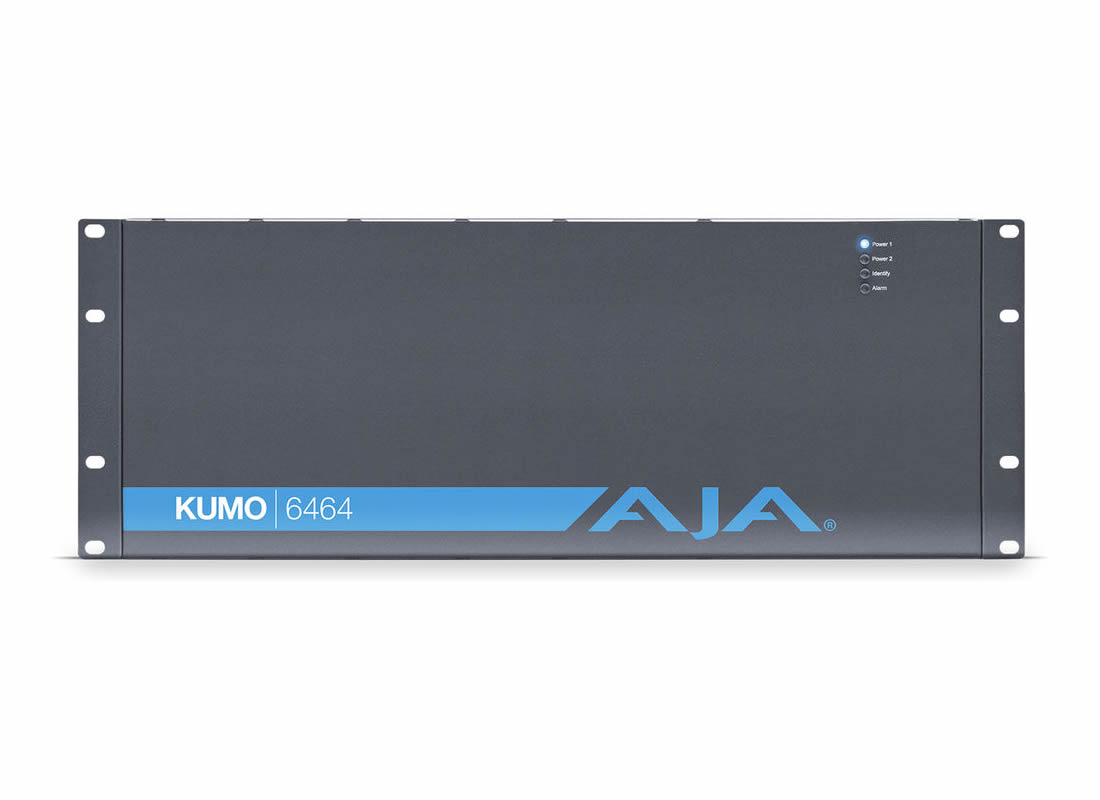
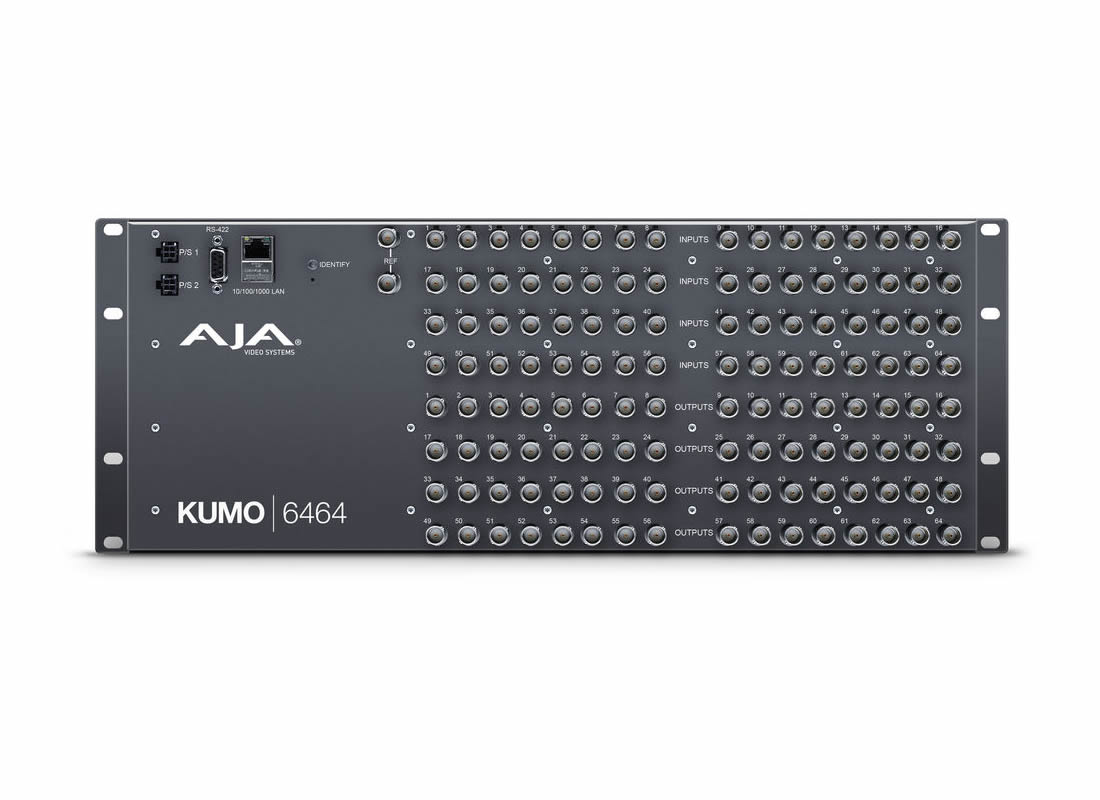
 The KUMO 6464 is a compact 64×64 3G-SDI matrix switcher designed to route video and embedded audio across SDI-based installations. It provides 64 inputs and 64 outputs supporting SD-SDI, HD-SDI and 3G-SDI formats and can be ganged for dual-link or 4K/Ultra HD workflows. The unit’s small depth and 4 RU profile make it suited to space-constrained racks and mobile environments.
Key features include a full 64×64 crosspoint matrix, ganged dual and quad port routing for dual-link and 4K/Ultra HD signals, and the ability to map any input to any number of outputs. It can also operate as a distribution amplifier by sending a single input to multiple outputs. The router architecture supports seamless switching of SDI signals and grouping for multi-link formats.
Performance adheres to broadcast standards and exceeds SMPTE specifications for SDI signal quality. The KUMO 6464 supports uncompressed 4K/Ultra HD when configured using ganged ports and maintains signal integrity through premium components. Dual redundant power supplies provide failover protection to maximize uptime.
Connectivity and control are provided via embedded Linux and a web-based HTTP interface, enabling configuration and monitoring from any browser on the network. The unit supports Bonjour/Zeroconf auto-detect and standard TCP/IP configuration, and it integrates with existing control systems using the Grass Valley Native Protocol over RS-422 or Ethernet. Ethernet control allows centralized management of multiple KUMO routers across a facility.
Typical applications include live production trucks, broadcast facilities, post-production suites, corporate AV installations, and live theatrical rigs where compact footprint and high routing density are required. The router’s distribution amplifier capability and ganged routing support make it suitable for both single-channel distribution and multi-link 4K workflows. Operators benefit from flexible routing options and format scalability.
Installation is simplified by the shallow 4 RU chassis and web-based configuration tools; routers can be named, sources and destinations labeled, and TCP/IP settings adjusted from a browser. The embedded OS and built-in network services reduce the need for additional software, while the robust construction and redundant power ensure professional reliability in critical environments. Firmware updates and remote management ease long-term maintenance.