



Description
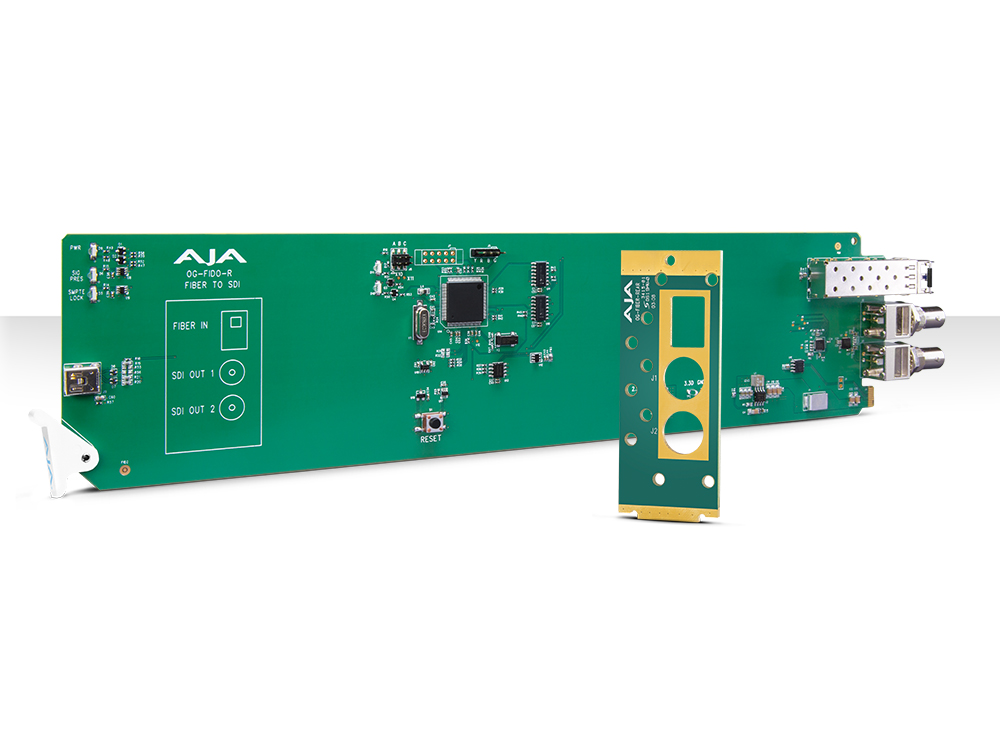
The OG-FiDO-R-MM is a 1-channel openGear receiver that converts Multi-Mode LC fiber signals to mirrored 3G-SDI outputs. It supports industry SDI data rates and provides reliable fiber-to-coax conversion for broadcast and pro AV installations. The module is designed to fit openGear 2RU frames for high-density rack deployments.
This receiver supports video formats from 150 Mbps up to 3 Gbps and auto-selects common SDI rates including 270 Mbps, 1.483 Gbps, 1.485 Gbps, 2.966 Gbps, and 2.970 Gbps. It offers two mirrored 3G-SDI BNC outputs and reclocking to maintain signal integrity over long coaxial runs. Input present and SMPTE lock LEDs provide at-a-glance status indication.
The OG-FiDO-R-MM accepts a single Multi-Mode LC fiber input with a nominal wavelength of 850 nm and supports OM4 distances up to 700 m (2296 ft) and OM3 distances up to 300 m (984 ft). The unit consumes approximately 2.5 watts and is hot-swap capable for minimal system disruption. Automatic detection and reclocking improve jitter tolerance and stability at supported SDI rates.
Remote monitoring and configuration are available through openGear DashBoard software compatible with Windows, macOS, and Linux. The openGear standard ensures interoperability with other certified openGear modules and frames. The card is compatible with OGX, OG3 and DFR-8321 openGear frames and is intended for installation in high-density openGear rackframes.
Typical use cases include fiber backbone links in OB trucks, studio signal distribution, and long-distance camera or equipment feeds that need conversion to coaxial SDI. The mirrored outputs allow feeding two independent devices or providing a redundant feed without additional hardware. The compact openGear form factor simplifies integration into rack-based systems and central infrastructure racks.
Installation is straightforward – the card is hot-swap capable and installs into standard openGear frames for immediate operation. Status LEDs report input presence and SMPTE lock for quick diagnostics and the DashBoard integration enables centralized monitoring and control. The design emphasizes stable signal conversion and low power draw for continuous broadcast operation.