



Description
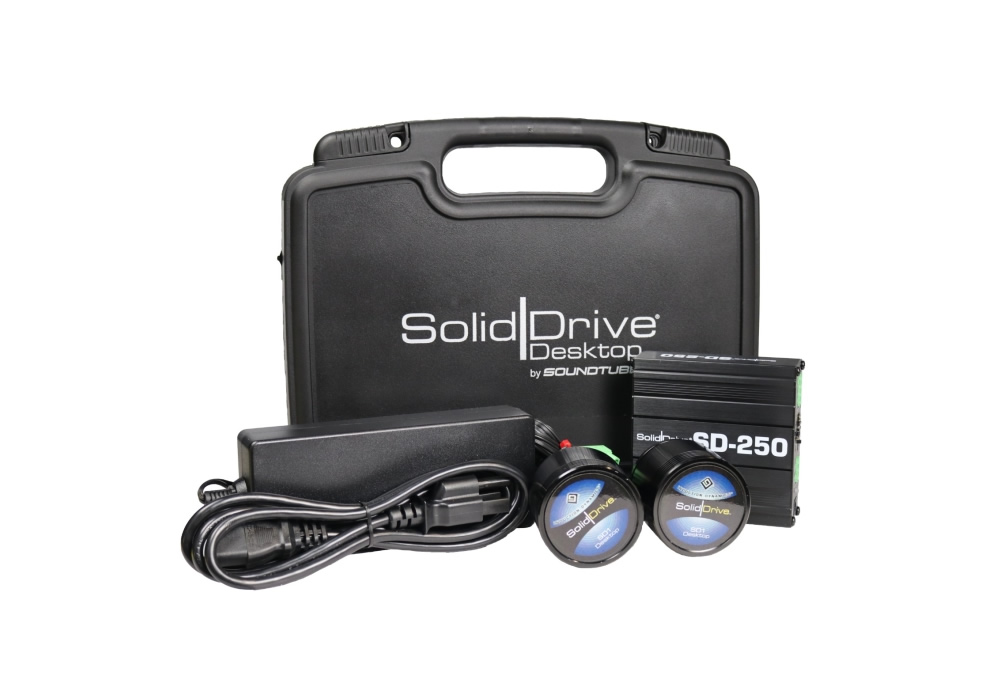
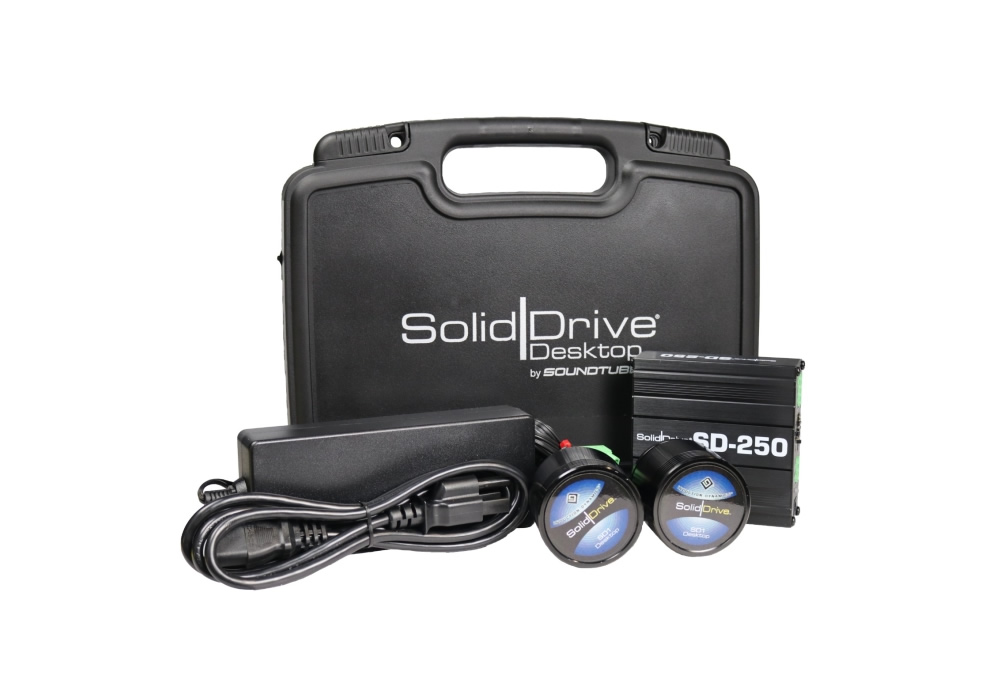
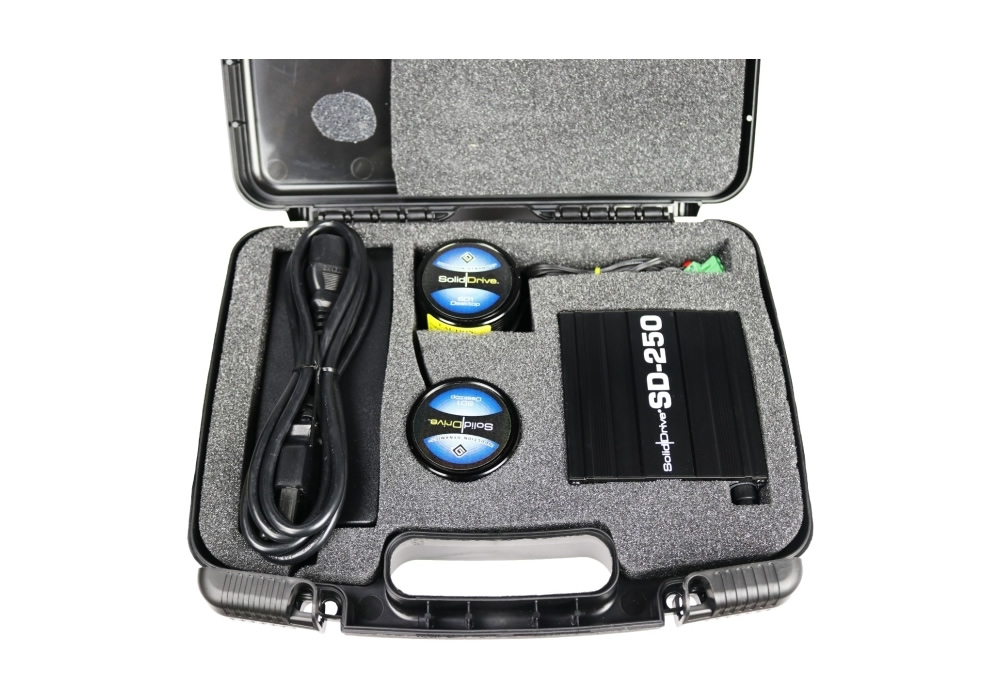
The SD-1DESKTOP kit pairs compact surface transducers with a matched 50 watt-per-channel amplifier to convert rigid surfaces into efficient sound radiators. It is designed to couple audio energy into glass, wood, metal, ceramics, laminates and composites without damaging finishes – the transducer backing is silicone to prevent marks. This product is intended to deliver clear, wideband audio where conventional speakers cannot be used.
The integrated amplifier provides 50 watts per channel and can operate in stereo, mono, or bridged mono to suit channel and power requirements. The amp includes selectable EQ curves tuned for glass, drywall and wood plus a bypass/flat option to preserve source tonality. Custom electronic EQ and the correct amplifier power are critical to achieving balanced low-end and articulate midrange from surface coupling.
Frequency response is optimized for surface playback with nominal ranges of 60 Hz – 15 kHz (±10 dB) and 80 Hz – 10 kHz (±3 dB) without EQ applied. The transducers present an 8 ohm nominal impedance with a minimum measured impedance of 7.8 ohms and continuous RMS power handling rated at 30 W and program power up to 100 W. Coverage is broad with a measured ±6 dB angle at 2 kHz of approximately 120 degrees.
Connectivity supports balanced stereo Euroblock inputs, unbalanced stereo mini jack and high-level Euroblock connections to integrate with line-level sources and system processors. The amplifier accepts 32 V DC power and is built with extra heat sink surfaces to sustain extended duty cycles at full output. Voltage gain and signal routing options permit easy integration into pro AV and signage systems.
This solution is suited for glass display cases, retail shelving, museum exhibits, conference room partitions and architectural installations where traditional loudspeakers are impractical. The transducers couple directly to the structure to create distributed audio zones without visible drivers. Proper EQ selection and amplifier configuration ensure intelligibility and musicality across speech and program material.
Construction uses anodized aluminum enclosures for the transducers and a compact amplifier chassis engineered for thermal endurance. The silicone-backed transducer pads protect surfaces while maintaining efficient energy transfer. Combined, the hardware and tuned electronics provide a practical installation path for architectural audio without compromising surface finishes.